https://devlaravel.imosver.com/pt/ebooks/monet-E0002837953E0002837953MONET6.72For Claude Monet the designation ‘impressionist’ always remained a source of pride. In spite of all the things critics have written about his work, Monet continued to be a true impressionist to the enhttps://www.aglutinaeditores.com/media/resources/public/31/3193/31930e84d826456a95633e383688398bEbookEbook/ARQUITECTURAEn stockPARKSTONE INTERNATIONAL000https://www.aglutinaeditores.com/media/resources/public/31/3193/31930e84d826456a95633e383688398b7.0750.352011/12/229781781605905NATHALIA BRODSKAYAEbookaño_2011engautor_NATHALIA BRODSKAYA
Artículo
MONET
NATHALIA BRODSKAYA
PARKSTONE INTERNATIONAL
ARQUITECTURA
? Aviso de Cookies
Utilizamos cookies para garantir a melhor experiência em nosso site.
Ler política de cookies.
? Gerir preferências de cookies
Este tipo de cookies permitem ao usuário a navegação através de uma página web, plataforma ou aplicação e a utilização das diferentes opções ou serviços que nela existam.
imosver_session
Descrição
Cookie técnica própria. Mantém a tua sessão identificada enquanto navegas: o carrinho, o idioma e o acesso à tua conta. Sem ela o site não pode funcionar.
Duração
120 minutos
Dependências
Domínio
imosver.com
OCT8NE
Descrição
Este cookie é utilizado para o correto funcionamento do Chat da Oct8ne para prestar o serviço de atendimento ao cliente ao usuário.
São aquelas que possibilitam o acompanhamento e análise do comportamento dos usuários em nossa página. A informação recolhida é utilizada para a medição da atividade dos usuários na web e a elaboração de perfis de navegação dos usuários.
_clsk
Descrição
Regista dados estatísticos do comportamento do visitante no site. Isto é utilizado para análises internas pelo operador do website.
Duração
1 dias
Dependências
Domínio
imosver.com
logglytrackingsession
Descrição
Identifica e regista a sessão do usuário para fins analíticos.
Duração
Sessão
Dependências
Domínio
.imosver.com
GOOGLE_ANALYTICS
Descrição
Regista um identificador único que é utilizado para gerar dados estatísticos sobre como o visitante utiliza o sítio web.
Duração
1 ano
Dependências
Domínio
.imosver.com
_clck
Descrição
Cookie própria do Microsoft Clarity. Guarda um identificador anónimo do navegador para atribuir ao mesmo utilizador as visitas a este site e elaborar estatísticas de utilização.
Duração
1 ano
Dependências
Domínio
imosver.com
CLID
Descrição
Cookie de terceiros do Microsoft Clarity. Identifica a primeira vez que o Clarity deteta este navegador em qualquer site que utilize o serviço.
Duração
1 ano
Dependências
Domínio
clarity.ms
_ga
Descrição
Cookie do Google Analytics. Guarda um identificador anónimo do navegador para distinguir utilizadores e elaborar estatísticas de utilização do site.
Duração
2 ano
Dependências
Domínio
.imosver.com
_ga_LZR660YW0M
Descrição
Cookie do Google Analytics 4. Mantém o estado da sessão de análise para poder medir as visitas e o percurso dentro do site.
Duração
2 ano
Dependências
Domínio
.imosver.com
São aquelas que nos permitem adaptar a navegação em nosso site às suas preferências (ex.: idioma, navegador utilizado, etc.).
_fbp
Descrição
Utilizado pelo Facebook para oferecer uma série de produtos publicitários, como ofertas em tempo real de anunciantes terceiros.
Duração
3 mês
Dependências
Domínio
.imosver.com
afiliado
Descrição
Cookie própria do programa de afiliados. Guarda durante 30 dias o código do afiliado que te trouxe até ao site, para lhe poder atribuir a venda.
Duração
1 mês
Dependências
Domínio
imosver.com
MUID
Descrição
Cookie de terceiros da Microsoft. Identifica navegadores únicos que visitam sites da Microsoft e é utilizada para fins publicitários, de análise e operacionais.
Duração
1 ano
Dependências
Domínio
clarity.ms
ANONCHK
Descrição
Cookie de terceiros da Microsoft. Indica se o identificador MUID é transferido para o ANID, uma cookie utilizada para fins publicitários.
Duração
10 minutos
Dependências
Domínio
clarity.ms
MR
Descrição
Cookie de terceiros da Microsoft. Indica se o identificador MUID deve ser atualizado.
Duração
7 dias
Dependências
Domínio
clarity.ms
SM
Descrição
Cookie de terceiros da Microsoft. Sincroniza o identificador MUID entre os vários domínios da Microsoft.
Duração
Sessão
Dependências
Domínio
clarity.ms
_fbc
Descrição
Cookie da Meta. Guarda o identificador do anúncio do Facebook ou Instagram a partir do qual chegaste, para atribuir a visita a essa campanha publicitária.
Duração
3 mês
Dependências
Domínio
.imosver.com
_gcl_au
Descrição
Cookie do Google Ads. Regista a visita proveniente de um anúncio para poder medir as conversões das campanhas publicitárias.
Duração
3 mês
Dependências
Domínio
.imosver.com
_uetsid
Descrição
Cookie da Microsoft Advertising. Identifica a tua sessão de navegação para medir as conversões das campanhas publicitárias do Bing.
Duração
1 dias
Dependências
Domínio
.imosver.com
_uetvid
Descrição
Cookie da Microsoft Advertising. Identifica o teu navegador entre visitas diferentes para medir as conversões das campanhas publicitárias do Bing.
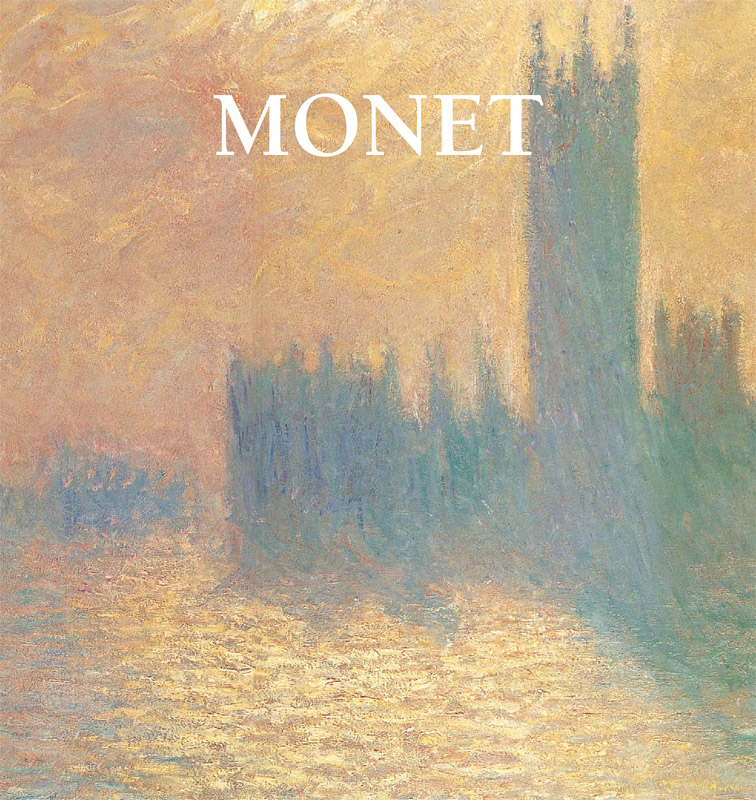
For Claude Monet the designation ‘impressionist’ always remained a source of pride. In spite of all the things critics have written about his work, Monet continued to be a true impressionist to the end of his very long life. He was so by deep conviction, and for his Impressionism he may have sacrificed many other opportunities that his enormous talent held out to him. Monet did not paint classical compositions with figures, and he did not become a portraitist, although his professional training included those skills. He chose a single genre for himself, landscape painting, and in that he achieved a degree of perfection none of his contemporaries managed to attain. Yet the little boy began by drawing caricatures. Boudin advised Monet to stop doing caricatures and to take up landscapes instead. The sea, the sky, animals, people, and trees are beautiful in the exact state in which nature created them – surrounded by air and light. Indeed, it was Boudin who passed on to Monet his conviction of the importance of working in the open air, which Monet would in turn transmit to his impressionist friends. Monet did not want to enrol at the Ecole des Beaux-Arts. He chose to attend a private school, L’Académie Suisse, established by an ex-model on the Quai d’Orfèvres near the Pont Saint-Michel. One could draw and paint from a live model there for a modest fee. This was where Monet met the future impressionist Camille Pissarro. Later in Gleyre’s studio, Monet met Auguste Renoir Alfred Sisley, and Frédéric Bazille. Monet considered it very important that Boudin be introduced to his new friends. He also told his friends of another painter he had found in Normandy. This was the remarkable Dutchman Jongkind. His landscapes were saturated with colour, and their sincerity, at times even their naïveté, was combined with subtle observation of the Normandy shore’s variable nature. At this time Monet’s landscapes were not yet characterized by great richness of colour. Rather, they recalled the tonalities of paintings by the Barbizon artists, and Boudin’s seascapes. He composed a range of colour based on yellow-brown or blue-grey. At the Third Impressionist Exhibition in 1877 Monet presented a series of paintings for the first time: seven views of the Saint-Lazare train station. He selected them from among twelve he had painted at the station. This motif in Monet’s work is in line not only with Manet’s Chemin de fer (The Railway) and with his own landscapes featuring trains and stations at Argenteuil, but also with a trend that surfaced after the railways first began to appear. In 1883, Monet had bought a house in the village of Giverny, near the little town of Vernon. At Giverny, series painting became one of his chief working procedures. Meadows became his permanent workplace. When a journalist, who had come from Vétheuil to interview Monet, asked him where his studio was, the painter answered, “My studio! I’ve never had a studio, and I can’t see why one would lock oneself up in a room. To draw, yes – to paint, no”. Then, broadly gesturing towards the Seine, the hills, and the silhouette of the little town, he declared, “There’s my real studio.”Monet began to go to London in the last decade of the nineteenth century. He began all his London paintings working directly from nature, but completed many of them afterwards, at Giverny. The series formed an indivisible whole, and the painter had to work on all his canvases at one time. A friend of Monet’s, the writer Octave Mirbeau, wrote that he had accomplished a miracle. With the help of colours he had succeeded in recreating on the canvas something almost impossible to capture: he was reproducing sunlight, enriching it with an infinite number of reflections. Alone among the impressionists, Claude Monet took an almost scientific study of the possibilities of colour to its limits; it is unlikely that one could have gone any further in that direction.