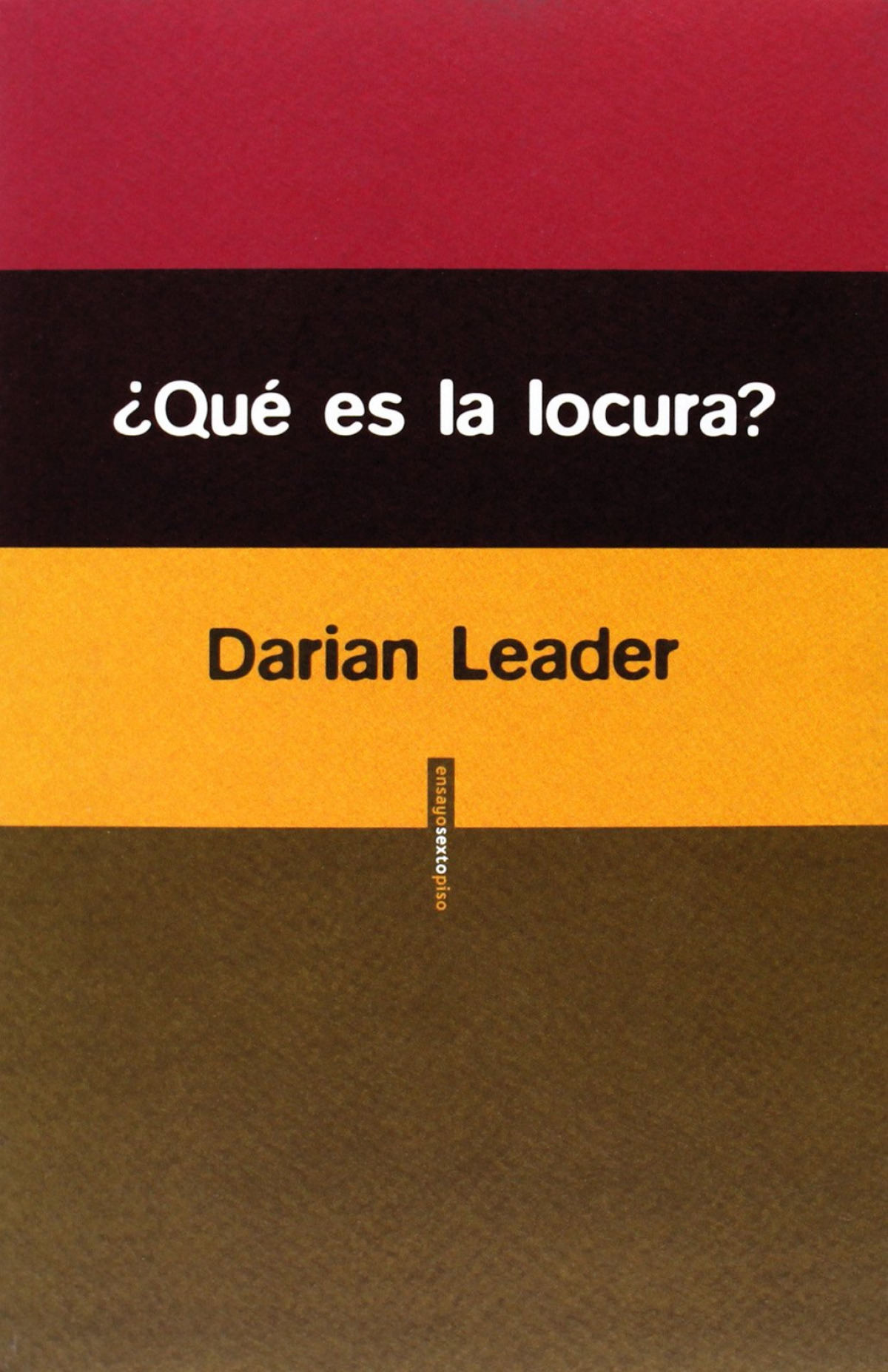
https://devlaravel.imosver.com/en/libros/que-es-la-locura-00100055300010005530¿Qué es la locura?27.55En nuestra sociedad, normalmente la locura se identifica con sus síntomas visibles: delirios, estallidos de violencia, alucinaciones, retraimiento... Pero, ¿y si la locura no fuera lo que pensamos? ¿Phttps://static.arnoia.com/imagenes_small/9788415/978841560123.jpgLibrosLibros/PSICOLOGIAEn stockSEXTO PISO000https://static.arnoia.com/imagenes_small/9788415/978841560123.jpg001043276000102367580010489683ALO00395422951.452013/04/089788415601234Leader, DarianLibrosaño_2013idioma_SpanishCformato_Tapa blanda o Bolsilloautor_Leader, Dariansaga_ENSAYO
Artículo
¿Qué es la locura?
Leader Darian
SEXTO PISO
PSICOLOGIA
? Cookie Notice
We use cookies to ensure you get the best experience on our website.
Read cookie policy.
? Manage cookie preferences
This type of cookie allows the user to browse a website, platform, or application and to use the different options or services that exist on it.
imosver_session
Description
Essential first-party cookie. It keeps your session identified while you browse: your basket, your language and access to your account. The website cannot work without it.
Duration
120 minutes
Dependencies
Domain
imosver.com
OCT8NE
Description
This cookie is used for the proper functioning of the Oct8ne Chat to provide customer support service to the user.
These are those that enable the tracking and analysis of user behavior on our website. The information collected is used to measure user activity on the website and to create user browsing profiles.
_clsk
Description
It records statistical data about the visitor's behavior on the website. This is used for internal analysis by the website operator.
Duration
1 days
Dependencies
Domain
imosver.com
logglytrackingsession
Description
Identifies and records the user session for analytical purposes.
Duration
Session
Dependencies
Domain
.imosver.com
GOOGLE_ANALYTICS
Description
Records a unique identifier that is used to generate statistical data about how the visitor uses the website.
Duration
1 year
Dependencies
Domain
.imosver.com
_clck
Description
Microsoft Clarity first-party cookie. It stores an anonymous browser identifier so that visits to this website can be attributed to the same user and usage statistics can be produced.
Duration
1 year
Dependencies
Domain
imosver.com
CLID
Description
Microsoft Clarity third-party cookie. It identifies the first time Clarity detects this browser on any website using the service.
Duration
1 year
Dependencies
Domain
clarity.ms
_ga
Description
Google Analytics cookie. It stores an anonymous browser identifier in order to distinguish users and produce website usage statistics.
Duration
2 year
Dependencies
Domain
.imosver.com
_ga_LZR660YW0M
Description
Google Analytics 4 cookie. It keeps the analytics session state so that visits and the journey through the website can be measured.
Duration
2 year
Dependencies
Domain
.imosver.com
These are the ones that allow us to adapt the navigation on our website to your preferences (e.g., language, browser used, etc.).
_fbp
Description
Used by Facebook to offer a series of advertising products, such as real-time bids from third-party advertisers.
Duration
3 month
Dependencies
Domain
.imosver.com
afiliado
Description
First-party affiliate programme cookie. It stores for 30 days the code of the affiliate that brought you to the website, so that the sale can be attributed to them.
Duration
1 month
Dependencies
Domain
imosver.com
MUID
Description
Microsoft third-party cookie. It identifies unique browsers visiting Microsoft sites and is used for advertising, analytics and other operational purposes.
Duration
1 year
Dependencies
Domain
clarity.ms
ANONCHK
Description
Microsoft third-party cookie. It indicates whether the MUID identifier is transferred to ANID, a cookie used for advertising purposes.
Duration
10 minutes
Dependencies
Domain
clarity.ms
MR
Description
Microsoft third-party cookie. It indicates whether the MUID identifier must be refreshed.
Duration
7 days
Dependencies
Domain
clarity.ms
SM
Description
Microsoft third-party cookie. It synchronises the MUID identifier across Microsoft domains.
Duration
Session
Dependencies
Domain
clarity.ms
_fbc
Description
Meta cookie. It stores the identifier of the Facebook or Instagram advert you arrived from, in order to attribute the visit to that advertising campaign.
Duration
3 month
Dependencies
Domain
.imosver.com
_gcl_au
Description
Google Ads cookie. It records a visit coming from an advert so that advertising campaign conversions can be measured.
Duration
3 month
Dependencies
Domain
.imosver.com
_uetsid
Description
Microsoft Advertising cookie. It identifies your browsing session in order to measure conversions from Bing advertising campaigns.
Duration
1 days
Dependencies
Domain
.imosver.com
_uetvid
Description
Microsoft Advertising cookie. It identifies your browser across visits in order to measure conversions from Bing advertising campaigns.
En nuestra sociedad, normalmente la locura se identifica con sus síntomas visibles: delirios, estallidos de violencia, alucinaciones, retraimiento... Pero, ¿y si la locura no fuera lo que pensamos? ¿Por qué individuos aparentemente normales pierden el juicio de la noche a la mañana y cometen actos criminales? ¿Es lo mismo estar loco que volverse loco? ¿Y si los síntomas que asociamos a la locura no fueran sino mecanismos de estabilización desarrollados por el paciente para tratar de llevar una vida normal? De la mano de maestros del psicoanálisis como Lacan, Freud o Brunswick, y a través del estudio de los célebres casos de Aimée, el Hombre de los Lobos y el asesino en serie Harold Shipman, así como de sus propias experiencias como psicoanalista, Leader plantea una nueva perspectiva sobre la locura, y expone por qué es fundamental volver a los modelos terapéuticos clásicos basados en el diálogo y la curiosidad por la historia del paciente. Asimismo, cuestiona la validez de los tratamientos farmacológicos actuales, cuyo objetivo es «convertir» al paciente en un ciudadano «normal», eficiente y autónomo, que se adapte a los sistemas normativos sociales. Qué es la locura nos invita a dejar los prejuicios y las simplificaciones a un lado, y nos muestra que no existen fórmulas predeterminadas para tratar a los pacientes, ni etiquetas válidas para clasificar las llamadas "enfermedades mentales". En definitiva, no hay nada que pueda sustituir la experiencia de escuchar y ayudar al paciente a utilizar los recursos de los que dispone para hacer de su existencia una experiencia, sino satisfactoria, al menos llevadera o, en palabras del propio Leader, para "crear un espacio seguro en el que vivir". «Uno de los pensadores contemporáneos más importantes.» The Guardian «Fascinante. Leader tiene un conocimiento formidable de la historia psiquiátrica y el talento de un contador de historias. Con maestría nos enseña cómo sería vivir en la mente de un psicótico. Un libro humano y muy necesario.» New Statesman DARIAN LEADER es psicoanalista y miembro fundador del Centre for Freudian Analysis and Research en Londres, así como Académico en el Centro de Psicoanálisis de la Universidad de Middlesex. Ha participado en numerosos documentales y conferencias sobre la relación entre arte y psicoanálisis, además de haber escrito ensayos para varios artistas. En Editorial Sexto Piso se publicó también La moda negra. Duelo, depresión y melancolía (2011).