https://devlaravel.imosver.com/en/libros/el-potlatch-digital-06302200180630220018El potlatch digital17.58En el año 1968, Garret Hardin publicó en la revis¡ta «Science» un artículo determinante, «The Trage¡dy of the Commons», en el que reflexionaba sobre la dificultad de la gestión de los bienes y los rechttps://static.arnoia.com/imagenes_small/9788437/978843762883.jpgLibrosLibros/FILOSOFIASin stockCATEDRA000https://static.arnoia.com/imagenes_small/9788437/978843762883.jpg18.550.922011/10/019788437628837Ortega, José FelipeLibrosaño_2011idioma_SpanishCformato_Tapa blanda o Bolsilloautor_Ortega, José Felipesaga_TEOREMA.SERIE MAYOR
Artículo
El potlatch digital
Ortega José Felipe
CATEDRA
FILOSOFIA
? Cookie Notice
We use cookies to ensure you get the best experience on our website.
Read cookie policy.
? Manage cookie preferences
This type of cookie allows the user to browse a website, platform, or application and to use the different options or services that exist on it.
imosver_session
Description
Essential first-party cookie. It keeps your session identified while you browse: your basket, your language and access to your account. The website cannot work without it.
Duration
120 minutes
Dependencies
Domain
imosver.com
OCT8NE
Description
This cookie is used for the proper functioning of the Oct8ne Chat to provide customer support service to the user.
These are those that enable the tracking and analysis of user behavior on our website. The information collected is used to measure user activity on the website and to create user browsing profiles.
_clsk
Description
It records statistical data about the visitor's behavior on the website. This is used for internal analysis by the website operator.
Duration
1 days
Dependencies
Domain
imosver.com
logglytrackingsession
Description
Identifies and records the user session for analytical purposes.
Duration
Session
Dependencies
Domain
.imosver.com
GOOGLE_ANALYTICS
Description
Records a unique identifier that is used to generate statistical data about how the visitor uses the website.
Duration
1 year
Dependencies
Domain
.imosver.com
_clck
Description
Microsoft Clarity first-party cookie. It stores an anonymous browser identifier so that visits to this website can be attributed to the same user and usage statistics can be produced.
Duration
1 year
Dependencies
Domain
imosver.com
CLID
Description
Microsoft Clarity third-party cookie. It identifies the first time Clarity detects this browser on any website using the service.
Duration
1 year
Dependencies
Domain
clarity.ms
_ga
Description
Google Analytics cookie. It stores an anonymous browser identifier in order to distinguish users and produce website usage statistics.
Duration
2 year
Dependencies
Domain
.imosver.com
_ga_LZR660YW0M
Description
Google Analytics 4 cookie. It keeps the analytics session state so that visits and the journey through the website can be measured.
Duration
2 year
Dependencies
Domain
.imosver.com
These are the ones that allow us to adapt the navigation on our website to your preferences (e.g., language, browser used, etc.).
_fbp
Description
Used by Facebook to offer a series of advertising products, such as real-time bids from third-party advertisers.
Duration
3 month
Dependencies
Domain
.imosver.com
afiliado
Description
First-party affiliate programme cookie. It stores for 30 days the code of the affiliate that brought you to the website, so that the sale can be attributed to them.
Duration
1 month
Dependencies
Domain
imosver.com
MUID
Description
Microsoft third-party cookie. It identifies unique browsers visiting Microsoft sites and is used for advertising, analytics and other operational purposes.
Duration
1 year
Dependencies
Domain
clarity.ms
ANONCHK
Description
Microsoft third-party cookie. It indicates whether the MUID identifier is transferred to ANID, a cookie used for advertising purposes.
Duration
10 minutes
Dependencies
Domain
clarity.ms
MR
Description
Microsoft third-party cookie. It indicates whether the MUID identifier must be refreshed.
Duration
7 days
Dependencies
Domain
clarity.ms
SM
Description
Microsoft third-party cookie. It synchronises the MUID identifier across Microsoft domains.
Duration
Session
Dependencies
Domain
clarity.ms
_fbc
Description
Meta cookie. It stores the identifier of the Facebook or Instagram advert you arrived from, in order to attribute the visit to that advertising campaign.
Duration
3 month
Dependencies
Domain
.imosver.com
_gcl_au
Description
Google Ads cookie. It records a visit coming from an advert so that advertising campaign conversions can be measured.
Duration
3 month
Dependencies
Domain
.imosver.com
_uetsid
Description
Microsoft Advertising cookie. It identifies your browsing session in order to measure conversions from Bing advertising campaigns.
Duration
1 days
Dependencies
Domain
.imosver.com
_uetvid
Description
Microsoft Advertising cookie. It identifies your browser across visits in order to measure conversions from Bing advertising campaigns.
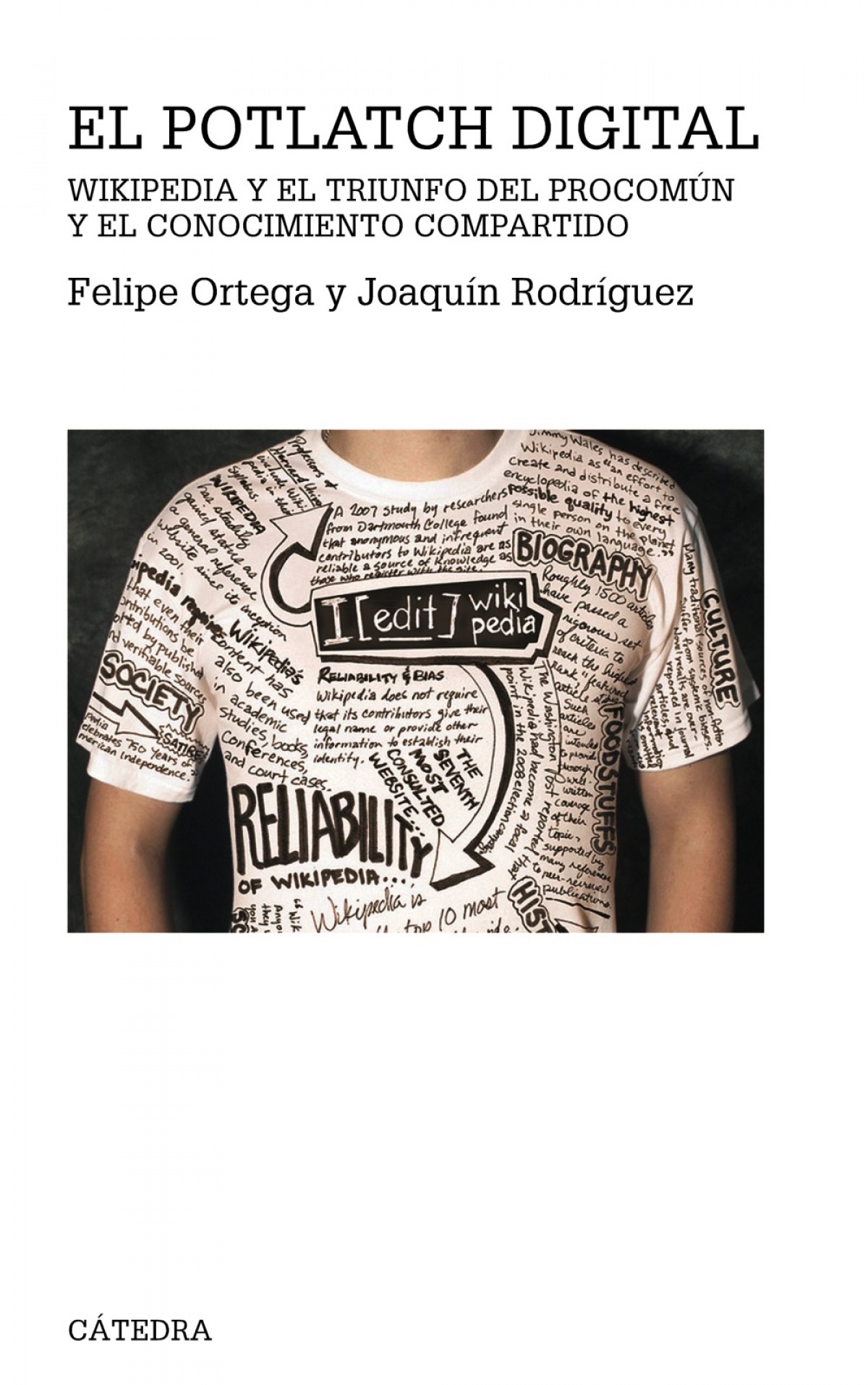
En el año 1968, Garret Hardin publicó en la revis¡ta «Science» un artículo determinante, «The Trage¡dy of the Commons», en el que reflexionaba sobre la dificultad de la gestión de los bienes y los recursos comunes y sobre el peligro al que estaba expuesta su subsistencia. La Premio Nobel de Economía Elinor Ostrom pasaría la mayor parte de su vida profesional investigando, precisamente, sobre los mecanismos de la acción colectiva y la gestión solidaria del proco¡mún, intentando inferir de las buenas prácticas al¡gunas características estructurales comunes. Con la in¡vención de Internet y la digitalización del conoci¡miento, resurge con vigor en versión digital el pro¡blema analógico precedente: ¿cómo pueden surgir y autogestionarse comunidades online cuyo propósito es la generación de conocimiento compartido? Es decir, ¿cómo puede y debe gestionarse el procomún digital, el «digital commons»? Wikipedia ofrece un ejem¡plo prototípico y floreciente de la construcción de una comunidad que consensúa sus políticas, esta¡blece sus mecanismos internos de reconocimiento y orga¡niza sus dispositivos de control y vigilancia, todo sin que circule efectivo de ninguna clase. El caso del «potlatch» canadiense nos sirve para comprender cómo en determinados contextos y circunstancias es nece¡sario desprenderse del capital que se posee para que la comunidad lo devuelva y lo reintegre en forma de reconocimiento y renombre; cómo en determinados contextos culturales, la especie de capital que circula no es monetaria, sino simbólica, en forma de repu¡tación y popularidad, y la lógica de su acumulación exige ser desinteresado para generar otra forma de interés. Así funcionan algunos de los casos más co¡nocidos de Internet y así se ha convertido la Wikipe¡dia en un caso del triunfo de la gestión del procomún y el conocimiento compartido.Prólogo de Antonio Lafuente. Introducción. El «potlatch digital». La génesis del campo de producción científico o el ejemplo de la colaboración instituida Etnografía de la Wikipedia. El contrato social digital. Apuntes sobre la dimensión política del conocimiento público. Para una antropología política del futuro. Doce ideas para evitar la tragedia del conocimiento común. Anexo I. Metodología de investigación.