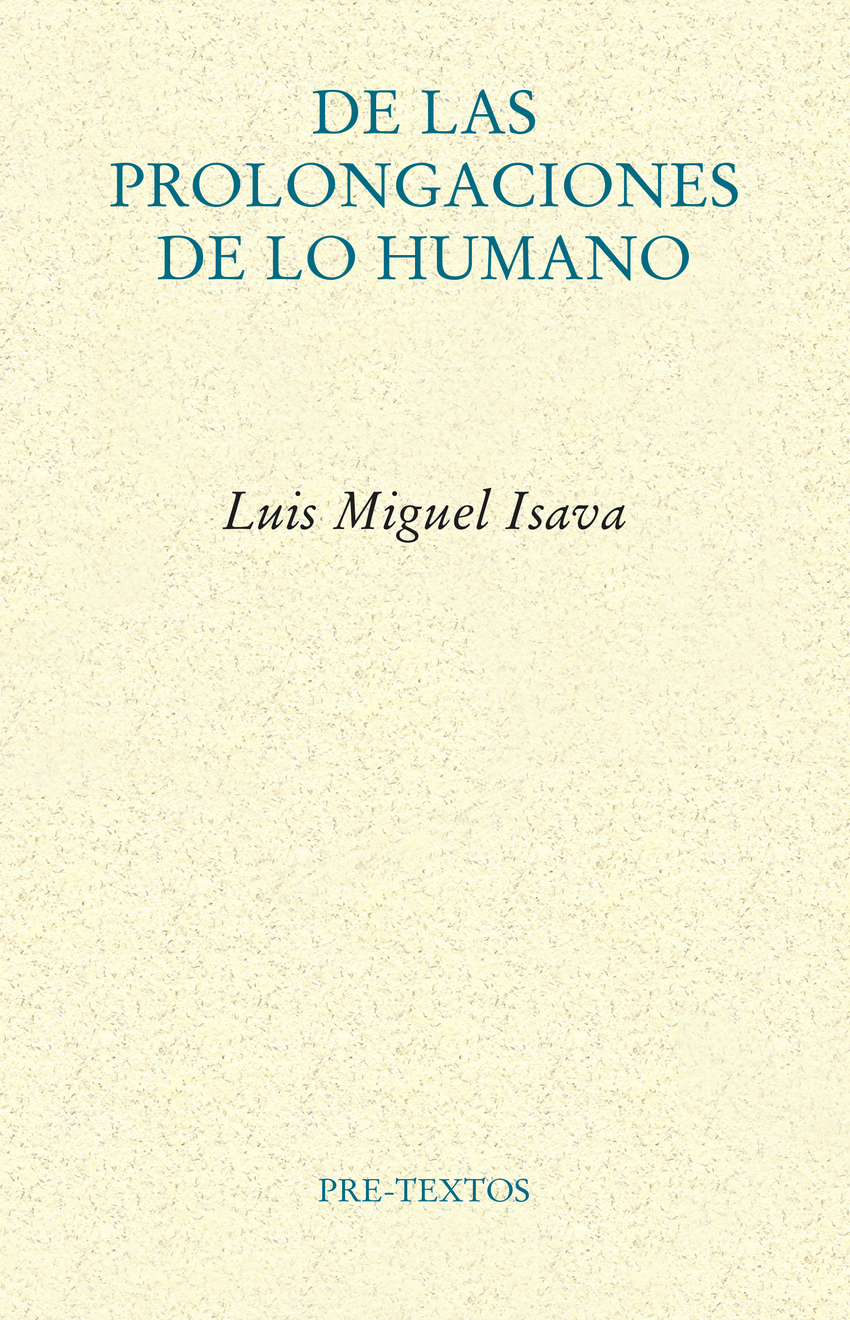
https://devlaravel.imosver.com/en/libros/de-las-prolongaciones-de-lo-humano-PUN0008126PUN0008126De las prolongaciones de lo humano23.75¿Qué es la experiencia ¿Cómo se constituye Una aproximación común a estas preguntas supone que el entendimiento es un epifenómeno que emerge de la percepción sensorial. Luis Miguel Isava retoma estas https://static.arnoia.com/imagenes_small/9788418/978841893579.jpgLibrosLibros/FILOSOFIAEn stockPRE-TEXTOS000https://static.arnoia.com/imagenes_small/9788418/978841893579.jpg2551.252022/10/019788418935794Isava, Luis MiguelLibrosaño_2022idioma_SpanishCformato_Tapa blanda o Bolsilloautor_Isava, Luis Miguelsaga_Ensayo
Artículo
De las prolongaciones de
Isava Luis Miguel
PRE-TEXTOS
FILOSOFIA
? Cookie Notice
We use cookies to ensure you get the best experience on our website.
Read cookie policy.
? Manage cookie preferences
This type of cookie allows the user to browse a website, platform, or application and to use the different options or services that exist on it.
imosver_session
Description
Essential first-party cookie. It keeps your session identified while you browse: your basket, your language and access to your account. The website cannot work without it.
Duration
120 minutes
Dependencies
Domain
imosver.com
OCT8NE
Description
This cookie is used for the proper functioning of the Oct8ne Chat to provide customer support service to the user.
These are those that enable the tracking and analysis of user behavior on our website. The information collected is used to measure user activity on the website and to create user browsing profiles.
_clsk
Description
It records statistical data about the visitor's behavior on the website. This is used for internal analysis by the website operator.
Duration
1 days
Dependencies
Domain
imosver.com
logglytrackingsession
Description
Identifies and records the user session for analytical purposes.
Duration
Session
Dependencies
Domain
.imosver.com
GOOGLE_ANALYTICS
Description
Records a unique identifier that is used to generate statistical data about how the visitor uses the website.
Duration
1 year
Dependencies
Domain
.imosver.com
_clck
Description
Microsoft Clarity first-party cookie. It stores an anonymous browser identifier so that visits to this website can be attributed to the same user and usage statistics can be produced.
Duration
1 year
Dependencies
Domain
imosver.com
CLID
Description
Microsoft Clarity third-party cookie. It identifies the first time Clarity detects this browser on any website using the service.
Duration
1 year
Dependencies
Domain
clarity.ms
_ga
Description
Google Analytics cookie. It stores an anonymous browser identifier in order to distinguish users and produce website usage statistics.
Duration
2 year
Dependencies
Domain
.imosver.com
_ga_LZR660YW0M
Description
Google Analytics 4 cookie. It keeps the analytics session state so that visits and the journey through the website can be measured.
Duration
2 year
Dependencies
Domain
.imosver.com
These are the ones that allow us to adapt the navigation on our website to your preferences (e.g., language, browser used, etc.).
_fbp
Description
Used by Facebook to offer a series of advertising products, such as real-time bids from third-party advertisers.
Duration
3 month
Dependencies
Domain
.imosver.com
afiliado
Description
First-party affiliate programme cookie. It stores for 30 days the code of the affiliate that brought you to the website, so that the sale can be attributed to them.
Duration
1 month
Dependencies
Domain
imosver.com
MUID
Description
Microsoft third-party cookie. It identifies unique browsers visiting Microsoft sites and is used for advertising, analytics and other operational purposes.
Duration
1 year
Dependencies
Domain
clarity.ms
ANONCHK
Description
Microsoft third-party cookie. It indicates whether the MUID identifier is transferred to ANID, a cookie used for advertising purposes.
Duration
10 minutes
Dependencies
Domain
clarity.ms
MR
Description
Microsoft third-party cookie. It indicates whether the MUID identifier must be refreshed.
Duration
7 days
Dependencies
Domain
clarity.ms
SM
Description
Microsoft third-party cookie. It synchronises the MUID identifier across Microsoft domains.
Duration
Session
Dependencies
Domain
clarity.ms
_fbc
Description
Meta cookie. It stores the identifier of the Facebook or Instagram advert you arrived from, in order to attribute the visit to that advertising campaign.
Duration
3 month
Dependencies
Domain
.imosver.com
_gcl_au
Description
Google Ads cookie. It records a visit coming from an advert so that advertising campaign conversions can be measured.
Duration
3 month
Dependencies
Domain
.imosver.com
_uetsid
Description
Microsoft Advertising cookie. It identifies your browsing session in order to measure conversions from Bing advertising campaigns.
Duration
1 days
Dependencies
Domain
.imosver.com
_uetvid
Description
Microsoft Advertising cookie. It identifies your browser across visits in order to measure conversions from Bing advertising campaigns.
¿Qué es la experiencia ¿Cómo se constituye Una aproximación común a estas preguntas supone que el entendimiento es un epifenómeno que emerge de la percepción sensorial. Luis Miguel Isava retoma estas interrogantes y desarrolla una propuesta muy distinta: la experiencia no se produce a partir del percibir, entendido como acto originario y no mediado, sino que tiene lugar a partir de ciertas condiciones de posibilidad de tipo formal. Para Isava este requisito funciona efectivamente como un protocolo: se trata de un sistema de criterios formales que efectivamente organizan y le otorgan sentido a lo percibido y así lo «sancionan» como experiencia. Los protocolos que hacen posible la experiencia están arraigados tan profundamente en la cultura que pueden resultarnos invisibles y «naturales», pero en realidad son cambiantes. Distintas culturas, en distintos momentos históricos, fundan cada una sus experiencias en base a protocolos diferentes. Esto puede resultar evidente al momento de considerar los procesos de encuentro entre culturas disímiles que han ocurrido a lo largo de la historia. Sin embargo, Isava se enfoca en un problema menos obvio y más sugerente: ¿qué ocurre cuando en el seno de una misma cultura aparecen objetos que, bajo los protocolos vigentes, no pueden ser asimilables como experiencia Esta posibilidad, nos muestra Isava, podemos hallarla en el arte, o más exactamente, en lo que él denomina los «artefactos culturales» de la modernidad. A partir de ejemplos concretos tomados de la poesía, la pintura, el cine y la música, Isava muestra cómo el arte puede suscitar momentos extraños, reflexivos o críticos que, al enfrentarse con los protocolos de la experiencia ya establecidos, pueden suscitar nuevas formas de estar en el mundo. Juan Pablo Lupi Luis Miguel Isava (Caracas, 1958) es Ph.D. en Literatura Comparada (Emory University) y profesor titular en la Universidad Simón Bolívar (Caracas, Venezuela). Se especializa en las áreas de poesía y poéticas contemporáneas, relaciones entre literatura y filosofía, estética, estudios de cine y teoría. Ha publicado, entre otros, un libro sobre teoría poética: Wittgenstein, Kraus, and Valéry. A Paradigm for Poetic Rhyme and Reason (2002). Ha traducido a Saint-John Perse, a Enrico Testa y, al inglés, a la poeta venezolana Hanni Ossott. Hizo una nueva traducción, con introducción y notas adicionales, del ensayo La obra de arte en la época de su reproducibilidad técnica de Walter Benjamin (2016). Ha publicado ensayos sobre poesía contemporánea, estética, teoría y cine en diversas revistas. En la actualidad es investigador invitado en la Universidad Libre de Berlín.